
How Payer Challenges Are Changing RCM for Healthcare Providers
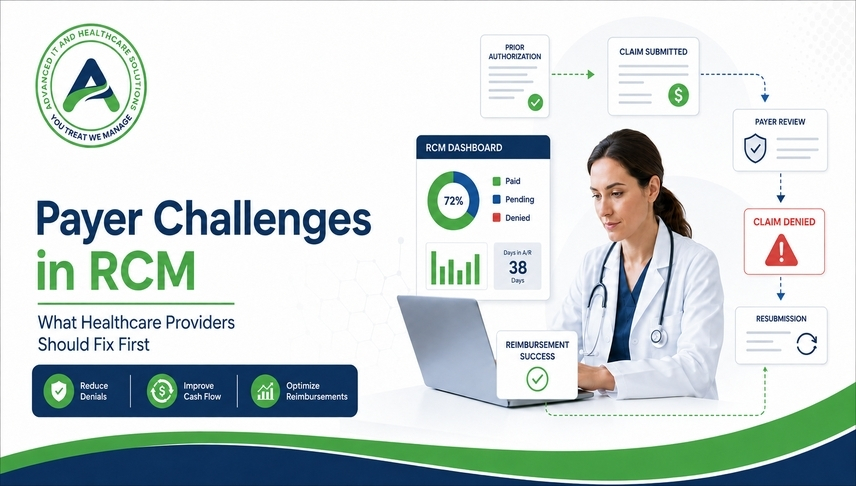
Healthcare providers are facing a revenue cycle that is becoming more difficult to manage through traditional billing processes alone. Payer policies continue to change, prior authorization requirements are increasing, documentation standards are becoming more detailed, and claim edits can vary from one insurance company to another. Even when a service is clinically appropriate, payment can still be delayed if payer-specific requirements are missed. For healthcare organizations, effective revenue cycle management now requires a connected process that starts with patient access and continues through documentation, coding, claim submission, payment posting, denial prevention, and accounts receivable follow-up. Instead of asking, “How can we work more denied claims?” providers should focus on a more important question: “What should we fix earlier in the revenue cycle so fewer claims become denials?” Payer complexity is rarely caused by a single issue. Healthcare organizations often manage multiple reimbursement challenges at once, creating added pressure across billing, coding, authorization, documentation, and claim follow-up. Even small gaps in these areas can lead to payment delays, claim rework, or preventable denials. Some of the most common challenges providers face are: Increasing prior authorization requirements Frequent payer policy changes More detailed documentation requirements Medical necessity reviews Claim editing rules Coding and modifier requirements Longer claim review cycles Higher denial volumes Different appeal and filing guidelines Denial management is still an important part of revenue cycle management, but handling every denial after it occurs can be costly and time-consuming. A stronger approach focuses on denial prevention by identifying the workflow issue that caused the claim to fail. Authorization, documentation, coding, eligibility, and payer-specific errors often point to problems earlier in the revenue cycle. Reviewing these patterns helps providers reduce repeat denials instead of only recovering lost revenue. Not every revenue cycle problem needs to be addressed at once. Healthcare organizations can make stronger progress by prioritizing the areas that create the greatest downstream financial impact. Many claim issues begin before billing starts, so patient demographics, insurance eligibility, benefits, prior authorization, referrals, coordination of benefits, and provider enrollment should be verified as early as possible. Accurate front-end information helps reduce claim delays, rejections, denials, and unnecessary rework. Prior authorization requirements can vary by payer, procedure, diagnosis, specialty, provider, and place of service. Teams should confirm approval details, service codes, visit limits, effective dates, and documentation requirements before claim submission to reduce preventable authorization-related denials. Clinical documentation should clearly support the services provided, medical necessity, clinical findings, treatment, and reported codes. Strong documentation helps reduce coding disputes, payer reviews, payment delays, and medical necessity denials. Accurate medical coding requires proper use of CPT, ICD-10-CM, HCPCS, modifiers, units, sequencing, and payer-specific rules. Coding should always align with the medical record to reduce claim edits and support accurate reimbursement. Different payers may have different rules for authorization, coding, documentation, modifiers, timely filing, appeals, and claim submission. Creating payer-specific workflows helps billing teams apply the correct requirements before claims are sent. Denial rates alone do not explain where problems begin. Providers should review denials by payer, specialty, procedure, coding issue, authorization status, documentation gap, and eligibility issue so recurring problems can be identified and prevented. Unpaid and underpaid claims often require timely follow-up, corrections, additional documentation, or payer communication. A structured A/R process helps prioritize aging claims, payment delays, appeals, and high-value accounts before revenue remains unresolved for too long. Revenue cycle management issues are easier to prevent when information moves between patient access, providers, coders, billing teams, denial management, and leadership. Sharing recurring problems and payer updates helps teams correct root causes instead of repeatedly fixing the same claims. A payer-ready revenue cycle does not mean allowing insurance companies to determine clinical care. It means making sure the administrative and reimbursement process can support appropriate services with accurate information. Before a claim reaches the payer, organizations should be able to answer several important questions. Eligibility, benefits, demographics, and coverage details should be verified. Authorization requirements should be checked before the service whenever possible. The medical record should provide clear clinical support for reported services. Codes and modifiers should align with documentation and applicable billing requirements. Relevant payer rules should be considered before submission. The organization should be able to explain and support what was billed. When these areas work together, clean claim performance can improve and preventable denials may decrease. Healthcare technology can improve revenue cycle operations, but software cannot compensate for poor workflows on its own. Technology is most useful when it helps teams make better decisions and reduces repetitive administrative work. RCM technology may help healthcare organizations: Track Authorization Requirements Identify Claim Errors Flag Missing Information Support Coding Reviews Automate Claim Status Checks Organize Denials Track A/R Analyze Payer Trends Monitor Revenue Cycle KPIs Collections alone do not provide enough information about revenue cycle health. Healthcare leaders should monitor indicators that show both financial outcomes and operational weaknesses. Important RCM metrics may include: First-Pass Claim Acceptance Rate Clean Claim Rate Initial Denial Rate Denial Rate by Payer Top Denial Reasons Prior Authorization Denials Eligibility-Related Denials Coding-Related Denials Documentation-Related Denials Days in Accounts Receivable Percentage of A/R Over 90 Days Appeal Success Rate Underpayment Trends Payment Turnaround Time Preventable Revenue Leakage Healthcare organizations do not always need a large-scale RCM redesign to begin improving performance. A focused 30-day review can uncover meaningful opportunities. Review recent: Denials Rejections Authorization Failures Eligibility Issues Payment Delays Underpayments Appeal Results Aging A/R Payer Trends Review how information moves through the organization: Patient Registration → Eligibility → Authorization → Clinical Documentation → Coding → Claim Submission → Payer Response → Payment → A/R Follow-Up Identify points where: Information Is Missing Tasks Are Repeated Payer Rules Are Missed Responsibility Is Unclear Follow-Up Is Delayed Documentation Arrives Late Claims Require Rework Based on the findings, organizations can establish focused improvements such as: Payer-Specific Claim Checklists Authorization Verification Steps Documentation Review Processes Coding Quality Checks Denial Root-Cause Reporting A/R Escalation Rules Staff Feedback Processes Revenue Cycle Dashboards Advanced IT & Healthcare Solutions helps healthcare organizations manage critical revenue cycle processes while improving visibility into billing and reimbursement performance. Our healthcare revenue cycle support can include: Medical Coding Support Eligibility and Benefits Verification Claims Submission Claims Review and Validation Denial Prevention Accounts Receivable Follow-Up Payment Follow-Up Revenue Cycle Reporting Billing Workflow Support Payer complexity now affects more than the billing department. It influences patient access, authorization, documentation, coding, claims, denials, accounts receivable, and financial reporting. Providers that focus only on denied claims may continue facing the same issues repeatedly. A stronger RCM strategy identifies problems earlier, improves communication between teams, and uses denial data to prevent future claim issues. The goal is to build a revenue cycle where more claims are accurate, supported, payer-ready, and positioned for timely reimbursement. You Treat the Patients. We Manage the Revenue.Why are Payer Challenges Increasing?
Why Denial Management Alone Is Not Enough
What Should Healthcare Providers Fix First?
1. Strengthen Front-End Revenue Cycle Processes
2. Improve Prior Authorization Management
3. Improve Clinical Documentation
4. Improve Coding Accuracy
5. Build Payer-Specific Workflows
6. Track Denials by Root Cause
7. Strengthen Accounts Receivable Follow-Up
8. Create Better Feedback Between Teams
What Does a Payer-Ready Revenue Cycle Look Like?
Is the patient's insurance information correct?
Was required authorization completed?
Does the documentation support the service?
Is the coding accurate?
Were payer-specific requirements reviewed?
Can the claim withstand a review?
How Technology Can Help Manage Payer Complexity
Revenue Cycle KPIs Healthcare Leaders Should Monitor
A 30-Day Plan for Better Payer Readiness
Days 1–10: Analyze the Problems
Days 11–20: Map the Revenue Cycle Workflow
Days 21–30: Build Prevention Steps
How AIHS Supports Revenue Cycle Performance
Final Takeaway