
10 Key Areas to Reduce Claim Denials and Improve Billing Revenue
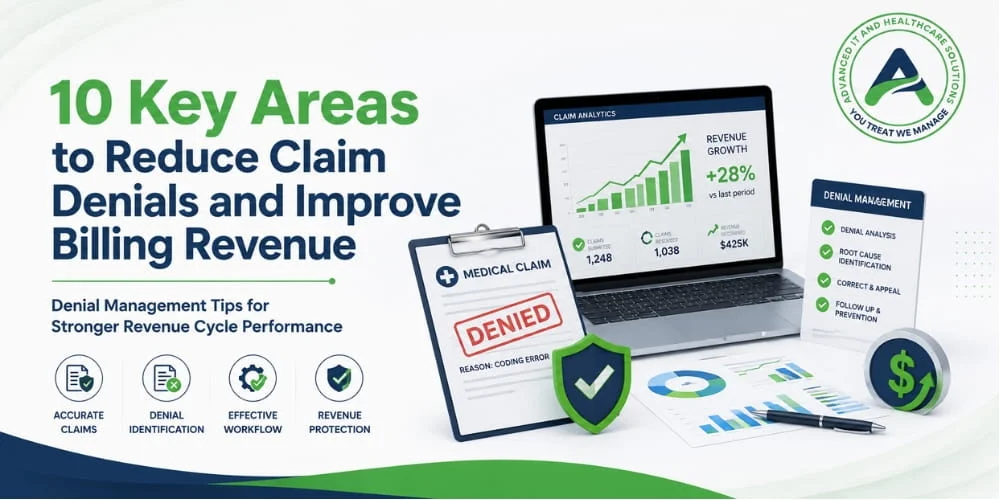
Claim denials can slow cash flow, increase administrative workload, and create avoidable revenue loss for healthcare practices. A strong denial management strategy helps teams identify common billing errors, improve documentation, verify patient information, and submit cleaner claims. Focusing on the right areas can make reimbursement more consistent and predictable overall. Clean claims begin with accurate patient information, correct coding, timely filing, and consistent follow-up on unpaid or rejected claims. When these focus areas are managed properly, providers can protect revenue and reduce stress. Advanced IT & Healthcare Solutions is a HIPAA-compliant billing company in Texas for growing practices statewide. Denial management in healthcare is the process of identifying, correcting, and preventing claim denials from insurance companies. When a claim is denied, the provider does not receive payment until the issue is reviewed, fixed, resubmitted, or appealed. Common reasons include coding errors, missing documentation, incorrect patient information, eligibility issues, or late claim submission. A strong denial management process helps medical practices recover lost revenue and reduce repeated billing mistakes. It also improves claim accuracy, cash flow, staff productivity, and the overall revenue cycle. Instead of only fixing denied claims, effective denial management focuses on preventing future denials before they affect reimbursement. A healthier billing process begins with knowing why claims are denied and fixing those issues before they affect payment. In revenue cycle management, even small mistakes in patient details, coding, documentation, authorization, or follow-up can create delays and reduce collections. The 10 key areas below can help healthcare practices reduce preventable denials, improve claim accuracy, and protect billing revenue. Eligibility verification should be completed before the patient visit to confirm active insurance coverage, benefits, copays, deductibles, and authorization requirements. When insurance is inactive or details are incorrect, claims are more likely to be denied. Front desk and billing teams should verify coverage every time, mainly for returning patients or changing insurance plans. This step helps avoid payment delays and unexpected billing issues later. Accurate eligibility checks create a stronger foundation for clean claim submission. Incorrect patient information is one of the easiest billing errors to prevent, but it can still cause major payment delays. Mistakes in name spelling, date of birth, policy number, group number, or insurance details can lead to claim rejection. Staff should carefully review patient demographics during registration and update records when needed. Even a small mismatch between the claim and payer records can delay reimbursement. Clean patient data helps reduce unnecessary denials and speeds up the billing process. Many procedures, diagnostic tests, medications, and specialty services require prior authorization before care is provided. If authorization is missing, expired, or entered incorrectly, the payer may deny the claim even when the service is medically necessary. Billing teams should track authorization status, approval numbers, service dates, and payer requirements. A strong authorization process helps prevent avoidable revenue loss. It also supports smoother communication between providers, patients, and insurance companies. Accurate medical coding is essential for proper claim approval and reimbursement. ICD-10, CPT, HCPCS codes, and modifiers must match the service provided and the patient’s diagnosis. Coding errors, outdated codes, or mismatched diagnosis and procedure codes can lead to denials. Regular coding review helps identify common mistakes before claims are submitted. Proper coding improves clean claim rates and supports better revenue cycle performance. Insurance payers often review documentation to confirm medical necessity and service accuracy. Incomplete notes, missing reports, unclear provider details, or unsupported procedures can cause denials. Providers should document symptoms, diagnosis, treatment plan, and services clearly. Strong documentation helps justify the care delivered and supports faster claim approval. When documentation is complete, billing teams also have stronger support for appeals if needed. Every insurance payer has specific filing deadlines for claim submission. Claims submitted after the deadline may be denied automatically, even if the service was medically necessary. Medical billing experts in Texas should monitor payer timelines and submit claims as soon as documentation is complete. Delayed submission can create cash flow issues and increase the risk of lost revenue. A timely filing system helps practices stay organized and improves reimbursement consistency. Claims should be reviewed carefully before they are sent to the insurance payer. This includes checking patient information, provider details, codes, modifiers, documentation, and payer-specific rules. A clean claim review process helps catch errors early and reduces the chance of rejection. Automated billing checks and manual review can both improve claim accuracy. Submitting cleaner claims saves time, reduces rework, and supports faster payment. Tracking denial reasons helps practices understand why claims are not being paid. Instead of fixing each denial separately, teams should look for repeated patterns and root causes. Common trends may include authorization issues, coding errors, eligibility problems, or documentation gaps. Once the cause is identified, the practice can improve workflows and prevent future denials. This approach helps reduce repeated mistakes and protects long-term billing revenue. Denied claims should be reviewed quickly to determine if they can be corrected, resubmitted, or appealed. Slow follow-up can lead to missed appeal deadlines and permanent revenue loss. Medical billing teams should organize denial queues, assign responsibility, and track appeal progress. Strong follow-up improves the chances of recovering payments that are still valid. A consistent appeals process keeps denied claims from sitting unpaid for too long. Billing rules, payer policies, coding guidelines, and authorization requirements change often. Regular staff training helps front desk, coding, billing, and clinical teams stay updated. When teams understand payer requirements, they can avoid mistakes before claims are submitted. Process improvement also helps practices fix weak points in the revenue cycle. A trained and organized team plays a major role in reducing denials and improving billing revenue. Reducing claim denials requires more than correcting errors after they happen. Healthcare practices need accurate eligibility checks, clean coding, complete documentation, timely filing, strong follow-up, and a clear denial management process that prevents the same issues from affecting revenue again and again. Advanced IT & Healthcare Solutions is a HIPAA-compliant medical billing company in Texas that helps providers improve billing workflows, reduce avoidable denials, strengthen revenue cycle performance, protect collections, and improve cash flow with reliable medical billing support. Book your free demo today and see how Advanced IT & Healthcare Solutions can help improve your billing performance. Claim denials can be reduced by verifying patient eligibility before visits, collecting accurate patient details, using correct ICD-10 and CPT codes, securing prior authorizations, submitting claims on time, and reviewing claims before submission. Regular denial tracking also helps identify repeated errors and prevent future revenue loss. The key steps in denial management include identifying the denial reason, reviewing payer rules, correcting billing or coding errors, gathering required documentation, resubmitting or appealing the claim, and tracking the outcome. A strong process also includes root cause analysis to prevent the same denial from happening again. Denial management is important because unpaid or delayed claims can affect cash flow, increase staff workload, and reduce practice revenue. An effective denial management process helps healthcare providers recover payments faster, improve claim accuracy, reduce repeated billing mistakes, and maintain a healthier revenue cycle. A denied claim may be corrected and resubmitted, appealed with supporting documentation, reviewed for coding accuracy, updated with missing patient or insurance information, or followed up with the payer for clarification. The best solution depends on the denial reason, payer guidelines, and claim submission deadline. To handle a claim denial, first review the explanation of benefits or payer response to understand the reason. Then correct any errors, attach missing documentation if needed, check payer appeal rules, and resubmit or appeal the claim within the deadline. Tracking each denial helps improve future billing performance.What is Denial Management in Healthcare?
Where Healthcare Practices Should Focus to Prevent Claim Denials
1. Patient Eligibility Verification
2. Accurate Patient Information
3. Prior Authorization Management
4. Correct Medical Coding
5. Complete Clinical Documentation
6. Timely Claim Submission
7. Clean Claim Review
8. Denial Tracking and Root Cause Analysis
9. Fast Appeals and Follow-Up
10. Staff Training and Process Improvement
Improve Billing Revenue With Expert Support
FAQs
How to reduce claim denials in medical billing?
What are the key steps in denial management?
Why is denial management important?
What are the possible solutions to a denied claim?
How do you handle claim denial?