
How to Reduce Claim Denials With Revenue Cycle Management in Healthcare
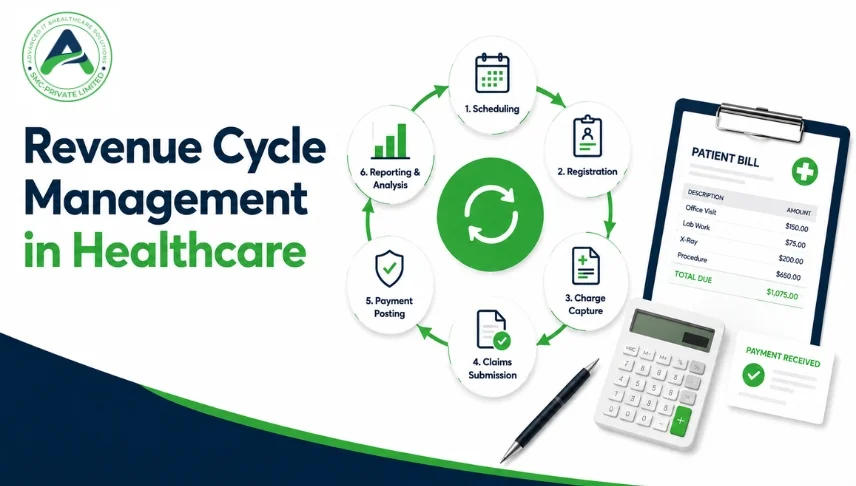
Claim denials continue to be one of the biggest challenges for healthcare providers, affecting cash flow, increasing administrative workload, and delaying reimbursements. A well-structured revenue cycle management in healthcare process helps identify billing issues early, improve claim accuracy, and streamline every step from patient registration to final payment. Reducing claim denials requires more than correcting rejected claims after submission. Strong documentation, accurate coding, eligibility verification, and proactive denial management all play an important role in improving reimbursement rates. At Advanced IT & Healthcare Solutions, our revenue cycle management services help practices reduce denials, strengthen financial performance, and maintain a more efficient billing process. Revenue cycle management in Healthcare (RCM) is the process of managing the financial side of patient care, from appointment scheduling and insurance verification to medical billing, claims submission, and payment collection. It helps healthcare providers maintain accurate billing, improve reimbursements, and support a healthier revenue cycle. A strong revenue cycle management strategy includes accurate coding, eligibility verification, denial management, payment posting, and accounts receivable follow-up. When these processes work together, providers can reduce claim denials, accelerate reimbursements, improve cash flow, and focus more on delivering quality patient care. Even small billing and coding errors can lead to delayed payments, rejected claims, and unnecessary administrative work. Identifying these issues early helps healthcare providers improve claim accuracy and protect revenue. Below are 10 common medical billing and coding mistakes that often lead to claim denials. Errors in the patient’s name, date of birth, address, or insurance details can cause claims to be rejected. Accurate information should be collected and verified before services are provided. Submitting a claim without confirming active coverage can result in immediate denial. Eligibility verification helps confirm benefits, copayments, deductibles, and coverage limitations. Certain procedures, medications, and diagnostic services require approval from the insurance payer. Failure to obtain prior authorization can lead to non-payment, even when the service was medically necessary. Using inaccurate ICD-10, CPT, or HCPCS codes can create inconsistencies in the claim. Coding should accurately reflect the patient’s diagnosis, treatment, and documentation. Medical coding guidelines and code sets are updated regularly. Submitting outdated or deleted codes can result in claim rejection and delayed reimbursement. Insurance companies may deny claims when documentation does not clearly support the need for a service. Clinical notes should explain the patient’s condition and justify the treatment provided. Submitting the same claim more than once can trigger a duplicate claim denial. Claims scrubbing helps identify duplicate submissions and other billing errors, when billing teams should review claim status before resubmitting unpaid claims. Modifiers provide additional information about a procedure or service. Missing, unnecessary, or incorrect modifiers can affect reimbursement and cause claim processing errors. Every insurance payer has a specific timely filing deadline. Claims submitted after the deadline may be denied, leaving the healthcare provider responsible for the lost revenue. Missing signatures, treatment details, or diagnosis information can prevent payers from processing a claim. Complete and accurate documentation supports proper coding and reduces denial risk. Claim denials usually fall into a few major categories linked to insurance verification, coding, authorization, documentation, and claim submission. Understanding these common denial types helps healthcare providers identify weak points in the billing process and take corrective action before revenue is affected. Eligibility denials occur when a patient’s insurance is inactive, expired, or incorrect on the date of service. They may also happen when the wrong payer information is submitted. Verifying insurance coverage before the appointment can significantly reduce these denials. These denials happen when a required authorization is missing, expired, or does not match the service provided. Since many procedures and treatments require payer approval, checking authorization requirements before care is essential. Coding denials are caused by incorrect ICD-10, CPT, HCPCS, or modifier usage. Incomplete or mismatched codes can prevent the payer from processing the claim correctly and may delay reimbursement. Payers may deny a claim when the medical records do not clearly support the need for the service. Detailed documentation should explain the patient’s condition, symptoms, diagnosis, and reason for treatment. Every insurance payer has a specific deadline for claim submission. Claims filed after that period may be denied, even when all other information is correct. Timely claim submission and regular follow-up help prevent revenue loss. Duplicate denials occur when the same claim or service is submitted more than once. Billing teams should review the claim status before resubmitting to avoid unnecessary rejections and processing delays. Revenue cycle management services in Texas improve billing performance, reduce payment delays, and support stronger financial operations. They also help healthcare providers maintain accuracy throughout the entire revenue cycle with RCM services for healthcare providers. Reduces claim denials and rejections Speeds up insurance reimbursements Improves overall cash flow Increases clean claim rates Strengthens coding accuracy Supports timely claim submission Improves eligibility verification Reduces administrative workload Enhances denial management Increases practice profitability A successful denial management process focuses on preventing errors before claims are submitted and resolving rejected claims without delay. The following steps can help healthcare providers improve claim accuracy, reduce revenue loss, and maintain a stronger Revenue Cycle Management process. Step 1: Verify Coverage Before Care: Check insurance eligibility, coverage limits, deductibles, and payer requirements before the patient receives services. Step 2: Confirm Prior Authorization: Make sure required approvals are obtained on time and match the exact procedure or treatment being provided. Step 3: Review Coding Accuracy: Use correct diagnosis, procedure, and modifier codes supported by complete clinical documentation. Step 4: Check Claims Before Submission: Review every claim for missing details, coding conflicts, and patient information errors before sending it to the payer. Step 5: Monitor Denial Reasons: Track recurring denial patterns to identify workflow problems and prevent the same mistakes from happening again. Step 6: Improve Documentation: Maintain clear and complete medical records that support the diagnosis, treatment, and medical necessity. Step 7: Submit Appeals Quickly: Review denied claims quickly and send appeals with the required documents before the payer deadline. Step 8: Train Billing Staff Regularly: Keep billing and coding teams updated on payer policies, coding changes, and compliance requirements. At Advanced IT & Healthcare Solutions, a revenue cycle management company in Texas, we provide efficient revenue cycle management in healthcare to reduce claim denials, accelerate reimbursements, improve cash flow, and support long-term practice growth through accurate billing, compliance-focused processes, and personalized RCM solutions. Experienced revenue cycle management specialists Proven claim denial reduction strategies Accurate medical billing and coding support Comprehensive denial management services Insurance eligibility verification expertise Timely claims submission and follow-up Faster reimbursements and improved cash flow Transparent reporting and performance insights HIPAA-compliant billing processes Personalized support for healthcare practices Reducing claim denials starts with a well-managed revenue cycle management in healthcare process. By improving eligibility verification, coding accuracy, documentation, and denial management, healthcare providers can increase clean claim rates, accelerate reimbursements, and maintain healthier cash flow. At Advanced IT & Healthcare Solutions, we help practices optimize every stage of the revenue cycle with reliable RCM solutions designed to reduce denials and maximize revenue. Contact our team today at +1 (469) 454-6966 to learn how we can improve your billing performance and financial outcomes. Revenue Cycle Management (RCM) is the process of managing the financial side of patient care, from appointment scheduling and insurance verification to medical billing, claims submission, and payment collection. An effective RCM process improves billing accuracy, verifies insurance coverage, ensures proper coding, and identifies errors before claims are submitted, helping reduce avoidable claim denials. Common causes include incorrect patient information, coding errors, missing prior authorization, inactive insurance coverage, incomplete documentation, and late claim submission. Denial management is the process of identifying, analyzing, correcting, and appealing denied insurance claims to improve reimbursement rates and prevent similar denials in the future. Providers can improve clean claim rates by verifying patient eligibility, using accurate medical codes, maintaining complete documentation, reviewing claims before submission, and filing claims on time. Eligibility verification confirms a patient's insurance coverage and benefits before treatment. This helps prevent claim denials, reduces billing errors, and speeds up reimbursement.What is Revenue Cycle Management in Healthcare?
10 Medical Billing and Coding Mistakes that Increase Claim Denials
1. Incorrect Patient Information
2. Incomplete Insurance Verification
3. Missing Prior Authorization
4. Incorrect Medical Codes
5. Using Outdated Codes
6. Lack of Medical Necessity
7. Duplicate Claim Submission
8. Incorrect Modifier Usage
9. Late Claim Filing
10. Incomplete Clinical Documentation
Major Types of Claim Denials in Revenue Cycle Management
Eligibility Denials
Prior Authorization Denials
Coding Denials
Medical Necessity Denials
Timely Filing Denials
Duplicate Claim Denials
Benefits of Revenue Cycle Management Services
Practical Ways to Strengthen Denial Management in RCM
Why Choose Advanced IT & Healthcare Solutions?
Strengthen Your Revenue Cycle With Effective Denial Management
Frequently Asked Questions
What is revenue cycle management in healthcare?
How can revenue cycle management reduce claim denials?
What are the most common reasons for medical claim denials?
What is denial management in healthcare?
How can healthcare providers improve clean claim rates?
Why is eligibility verification important in medical billing?